

Nearly half of all American adults are living with a condition that quietly destroys the tissue and bone supporting their teeth, and most of them have no idea. Gum disease, or periodontal disease, is one of the most widespread chronic health conditions in the country. Yet, it remains largely invisible until it reaches an advanced and far more difficult-to-treat stage. Understanding the true scope of this disease through the data isn’t just eye-opening; it’s a strong case for why staying on top of your oral health matters more than most people realize.
At Eckland Family Dentistry, we have been helping patients in and around Woodinville, WA, recognize and address gum disease since 1980. Dr. Keagan Eckland and Dr. Emily Chow bring a risk-based philosophy to every patient interaction, meaning we look at the full picture of your oral health rather than simply reacting to symptoms. Our periodontics services are designed to catch disease early, treat it effectively, and help patients understand what the numbers actually mean for their long-term health.
How Widespread Is Gum Disease, Really?
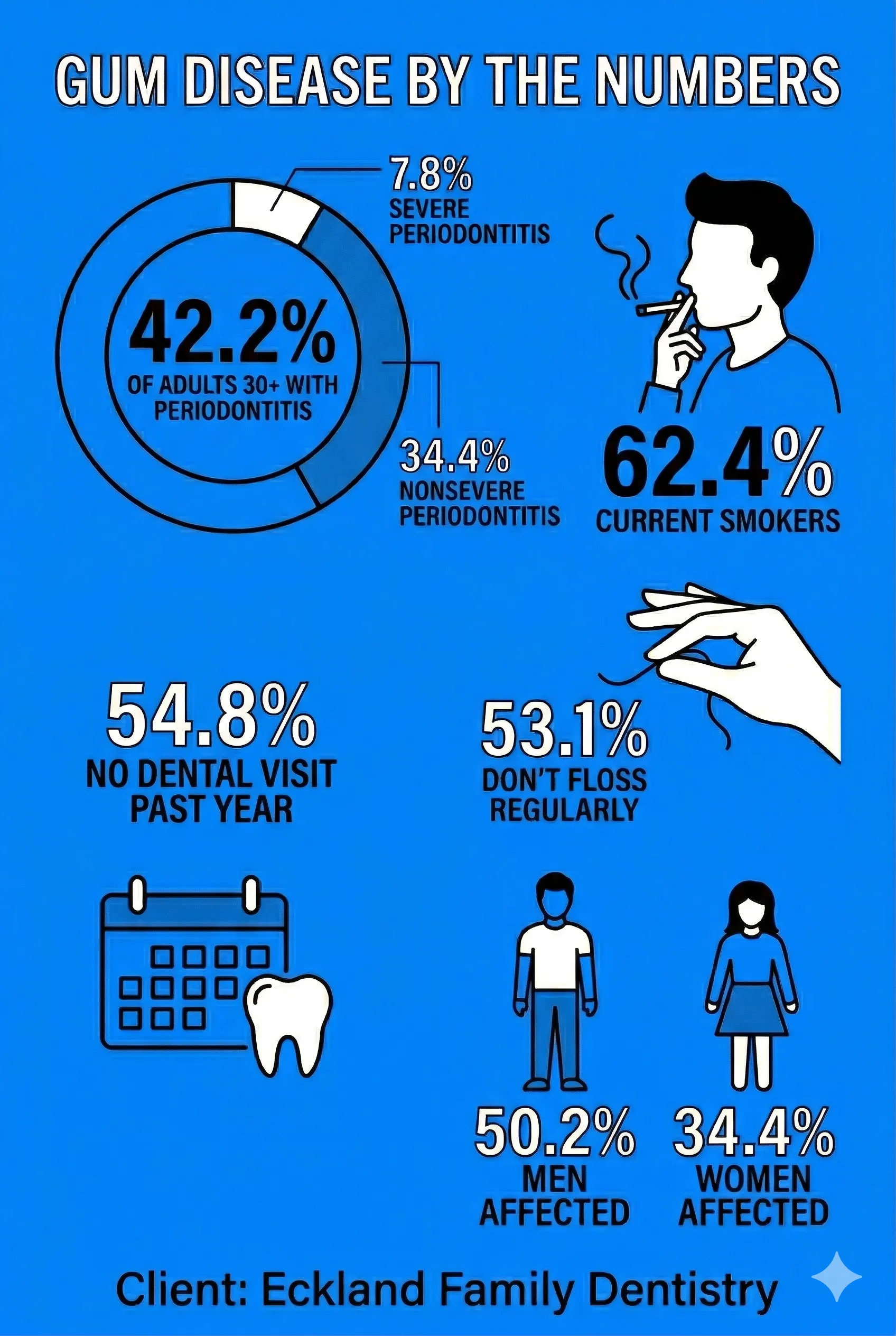
According to the National Institute of Dental and Craniofacial Research, 42.2% of adults aged 30 and older in the United States have some form of periodontitis, with 7.8% experiencing severe disease. That means roughly two in five adults are currently affected, and the numbers climb sharply with age. Among adults 65 and older, prevalence rates for periodontitis rise dramatically, making it one of the most common conditions in that age group.
The data also reveal pronounced disparities by behavior. Adults who hadn’t seen a dentist in the past year showed total periodontitis rates of 54.8%, and those who skipped flossing regularly showed rates exceeding 53%. That single pattern makes a powerful argument for consistent preventative care.
The Systemic Health Connection Behind the Numbers
The statistics on periodontal disease become even more significant when you consider what the research says about gum disease’s relationship to the rest of the body.
Gum Disease and Heart Health
Research has established links between periodontitis and cardiovascular disease, and the proposed mechanism is rooted in inflammation. The CDC notes that smoking is a major cause of severe gum disease in the United States, and current smokers show periodontitis rates of 62.4%, far above the general population average. Bacteria from infected gum tissue can enter the bloodstream, triggering chronic systemic inflammation that affects blood vessels and increases cardiovascular risk.
Gum Disease and Diabetes
The relationship between gum disease and diabetes is bidirectional, meaning each condition can worsen the other. People with diabetes are more susceptible to gum infections because elevated blood sugar impairs immune response, while active periodontal infection increases insulin resistance and makes blood sugar harder to regulate. This connection is one reason our team evaluates patients’ full health histories, not just their dental charts.
What the Data Tells Us About Risk Factors
The statistics consistently point to a few key behavioral and biological risk factors that drive higher rates of periodontal disease. Beyond smoking, adults who do not floss regularly show a periodontitis prevalence of 53.1%, compared to notably lower rates among those who maintain consistent hygiene habits. Men are also disproportionately affected compared to women, with total periodontitis prevalence rates of 50.2% versus 34.4%, respectively, according to the same national survey data.
These figures underscore something we communicate to every patient: gum disease is not an inevitable part of aging. It is largely preventable with consistent oral hygiene habits and professional care. When disease does develop, our restorative dentistry team has the tools to address the damage and restore function. For patients who have already experienced significant tooth loss due to advanced disease, solutions such as dental implants can help rebuild both oral health and confidence.
Take These Numbers Seriously at Eckland Family Dentistry
The statistics on gum disease are not meant to alarm; they are meant to empower. When you understand how common and consequential periodontal disease truly is, you are far better positioned to make decisions that protect your health before problems escalate. Dr. Eckland and Dr. Chow, both Kois Center graduates, bring a level of precision and commitment to patient education that goes beyond a routine cleaning. We believe informed patients make better decisions, and we take the time to explain what we find and why it matters.
If it has been a while since your last visit, or if you have noticed any signs of gum tenderness, bleeding, or recession, now is the time to act. The data clearly shows that the longer gum disease goes unaddressed, the more difficult it becomes to reverse. Request an appointment today and let our team give your gum health the thorough, risk-based evaluation it deserves.